Guy Woodhouse
Rosemary's BabyGuy Woodhouse is an actor whose longed-for career breakthrough comes at the cost of his honesty and his marriage to Rosemary Woodhouse. At first, the cost is obscured by familiar disappointments: a rival is expected to win a part, Guy feels eclipsed by his own stalled career, and he recognizes that his self-absorption has wounded Rosemary. But after Donald Baumgart becomes blind and Guy’s prospects abruptly change, professional success becomes bound up with a bargain Guy will not openly acknowledge. His final attempt to excuse the bargain to Rosemary exposes the distance between his performance as a loving husband and his actions.
Identity and Acting Career
Guy is a working actor whose career has not yet brought the recognition he wants. Before changing his name, he was Sherman Peden. When Mr. Micklas asks whether he has seen Guy in anything, Guy jokingly claims to have appeared in Hamlet and The Sandpiper; Rosemary corrects him, naming his parts in Luther, Nobody Loves An Albatross, television plays, and commercials. The exchange establishes both his modest résumé and the ease with which acting shades into self-presentation.
That insecurity is sharpened when Guy competes with Donald Baumgart for a part in a new comedy. After reading for it a second time, Guy complains about the name of the actor he expects to beat him, a small but telling displacement of his anxiety onto his rival. He is pleased when Rosemary reports that Edward Hutchins remembered him from Another World, but the recognition does not quiet his fear of losing the role. The prospect of success matters to him not simply as employment: it becomes the measure by which he judges his future and, for a time, the attention he gives his marriage.
Marriage and the Promise of Change
Guy and Rosemary move into The Bramford after learning that an apartment has become available there, although they had already signed a lease elsewhere. The choice is an early sign of the force the old building exerts over their shared plans: they had been on its waiting list since their marriage and seize the opportunity despite the complication. Their life there includes ordinary domestic routines and Guy’s fluctuating fortunes, but the marriage’s strain grows as his attention narrows around his work.
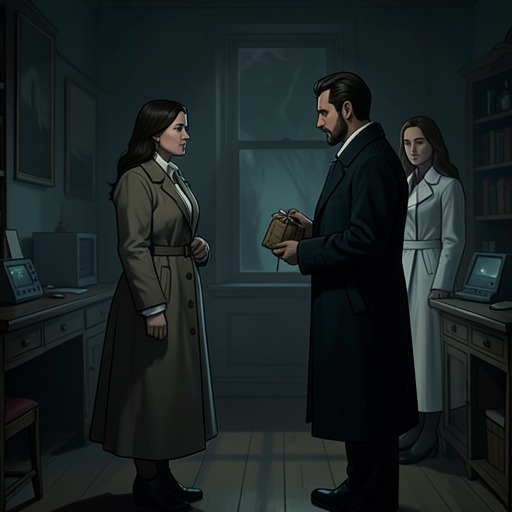
When Guy receives the news that Donald Baumgart’s blindness may open a professional opportunity for him, Rosemary waits for his reaction, aware that he has “The Something Big.” Later, Guy admits that he has been hoping Donald will not regain his sight and calls himself a rat for doing so. Rosemary tries to reassure him that conflicted feelings are natural. Guy answers by promising that, even if the opportunity collapses and he remains a minor actor, he will stop giving her the short end of the stick. He admits that he has been so consumed by his career that he has given no thought to hers, then proposes that they have a child—three, one at a time. The declaration sounds like a return to mutual life, but its timing gives it an uneasy double edge: Guy’s renewed promise of intimacy arrives just as the prospect of advancement has become real.
At another moment, Rosemary names the problem as a lack of openness on both sides. She explains that she went to a cabin to think through what had gone wrong between them, and describes Guy’s absorption in the show, the pilot, and the changes in his career. Guy agrees that he is self-centered, says he loves her, and promises to make that love clearer. The scene presents him as capable of recognizing the damage he causes and speaking tenderly about repair. What it does not establish is that recognition will become candor or changed conduct.
Success and Its Cost
Guy’s career takes off after Donald Baumgart loses his sight. Rosemary later connects the blindness to Guy’s exchange of ties with Donald, accusing him of supplying a personal belonging for a spell. Guy responds by asking what the tie has to do with anything, rather than offering a clear explanation. The evidence leaves his precise knowledge at that earlier stage uncertain, but it links the transfer, Donald’s blindness, and Guy’s sudden professional rise in Rosemary’s understanding of the events.
The success continues with a play that opens in Philadelphia after its director and title have each changed repeatedly. Rosemary, who has been discouraged from joining the try-out tour, travels there with Minnie Castevet and Roman Castevet for the opening. The production itself is tedious, and the gathering afterward is subdued; Guy’s mother insists that both he and the play are superb, while the others worry. Two reviews arrive after midnight. Both condemn the play but praise Guy, and a third review the next morning calls his performance dazzling and predicts larger productions for him. The ride back to New York is consequently much happier than the trip out. The sharp contrast between the play’s failure and Guy’s acclaim makes his personal elevation feel uncannily detached from ordinary artistic judgment.
For Rosemary, that contrast deepens a more frightening pattern. When she tells Guy that Roman is the son of Adrian Marcato and has adopted the rearranged name “Steven Marcato,” she explains that Edward Hutchins’s book and message led her to the discovery. Guy asks who told her, then examines the book. The scene places him at the threshold of the truth Rosemary has uncovered, but it does not show him openly joining her in acting on it. Later, as she tries to understand his involvement, she returns to Donald Baumgart’s blindness as the answer to why Guy might have turned to Roman and Minnie’s circle despite his successful career. Her reasoning identifies the blindness as the crucial exchange; Guy’s motives remain legible through the consequences and his evasions rather than through a full confession.
Betrayal and Ending
Rosemary’s attempt to recover her child brings Guy’s betrayal into direct view. Having learned from her earlier appeal to Dr. Hill that she cannot count on others to believe her, she decides to act alone. She realizes that a secret route must connect the apartments, searches the linen closet, and discovers a concealed door leading into the apartment of Minnie and Roman. When she enters, she finds the hallway empty and no crib or baby in the bedroom. These discoveries are Rosemary’s, not Guy’s; their significance is that the household secrecy she has suspected has a physical route through the very domestic space she had furnished and used.
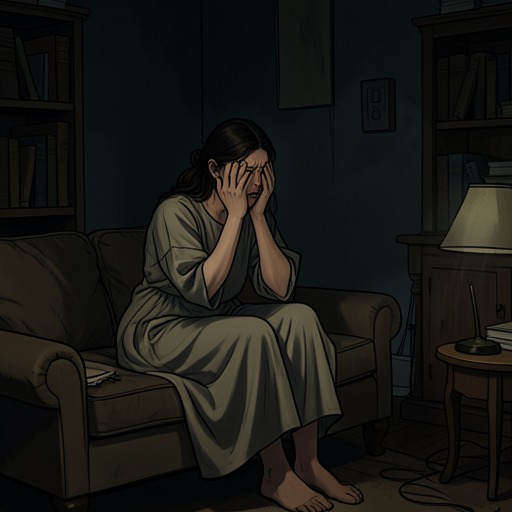
Guy arrives while Rosemary is with the group around the bassinet. He tells her that she will be all right because Abraham Sapirstein is with her, and insists that she has not really been hurt. He tries to make her loss seem equivalent to having had a baby who died, then adds that they are receiving so much in return. The language turns her suffering into an acceptable price for their gains. Rosemary spits at him. Her gesture refuses the consoling explanation and registers the final collapse of the openness and loyalty Guy had promised her.
Narrative Role
Guy’s importance lies in the gap between his professional persona and his conduct at home. He can acknowledge selfishness, offer affection, and promise a new beginning; he can also evade Rosemary’s questions and finally frame her pain as a cost compensated by success. The career breakthrough is therefore not simply a reward in his story. Set against Donald Baumgart’s blindness and Rosemary’s discovery of the hidden passage, it becomes evidence of the corrupt exchange around which the domestic plot has turned. Guy’s rise and the destruction of trust in his marriage move together, until his words of reassurance reveal not reconciliation but complicity.